Tool features
What the road base calculator shows about compaction and lifts
The road base calculator separates finished compacted depth from loose delivery volume and reports a planning lift count without pretending to design the pavement section.
Compacted lift count
Divide the finished base depth by an editable maximum lift depth instead of treating a deep placement as one operation.
Regional base-course language
Switch familiar units and product labels without assuming Class 2 base and Australian roadbase are equivalent.
Source-specific loose density
Replace the preset for virgin, dense-graded, or recycled base with the value for the delivered blend.
Editable lift limit
Flag how many compacted placements fit within the selected total course depth without prescribing passes.
Finished-to-delivered chain
Retain compacted volume, loose supply volume, exact weight, and rounded load as distinct results.
Base-course delivery cost
Apply local tonnage or volume pricing, truck capacity, minimums, and delivery to this course alone.
What changes the result
Road base is both a material and a placed layer
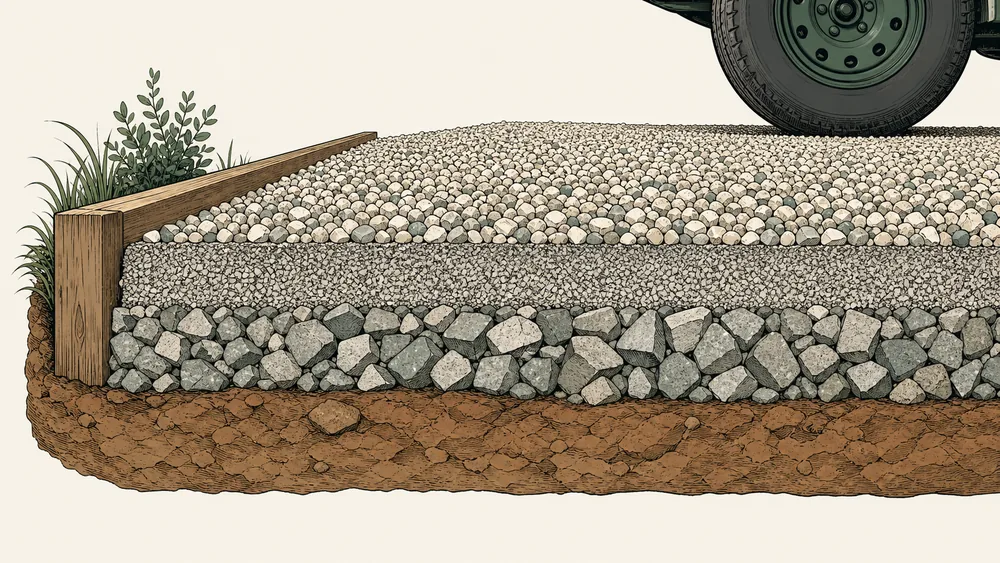
Road base quantity begins with the finished layer geometry, but ordering begins with loose material. The difference belongs in a visible compaction factor rather than an unexplained increase in tonnage.
Local terms such as Class 2 aggregate base and Australian roadbase can describe different specifications. The calculator offers named presets for workflow, while density and all purchasing adjustments stay editable.
Keep the road base calculator output tied to the local product name, finished thickness, maximum lift depth, and loose density so a US or Australian label is not mistaken for a universal specification.
Why lift count is shown
A deep compacted layer may be placed in multiple lifts. The tool divides total thickness by the entered lift depth for planning, but it does not prescribe equipment or passes.
Base course is not the finished road
This page estimates the selected base layer. A separate gravel surface, crown, shoulder, and drainage design are outside its quantity total.

Reference data
Road base thickness, compaction, and lift reference
All values are editable quantity assumptions; traffic, subgrade, drainage, and project specifications control actual design.
Planning inputs
finished compacted base
FHWA gravel-road resources are cited for road context; this calculator does not size a road or certify material compliance.
Road base calculation chain
visible from input to purchase
The copied takeoff should identify regional product context, compacted course depth, lift assumption, loose factor, and delivery unit.
Why it matters
Base-course volume changes before it reaches the road
Loose-volume factor
The purchase estimate starts above the finished compacted volume.
Editable lift depth
Use it to flag multiple planned placements without prescribing compaction.
Naming context
Choose familiar units and product language without creating duplicate URLs.
Keep the selected product, finished depth, lift assumption, density, extra percentage, and supplier increment with the result.
Where it fits
Road base quantity scenarios
The page measures one compacted base course and keeps finished surfacing or structural decisions outside the number.

Unsealed road base
Measure the prepared footprint before adding a distinct surface course or shoulder quantity.

Parking area base
Use multiple shapes for irregular bays and keep traffic design separate.
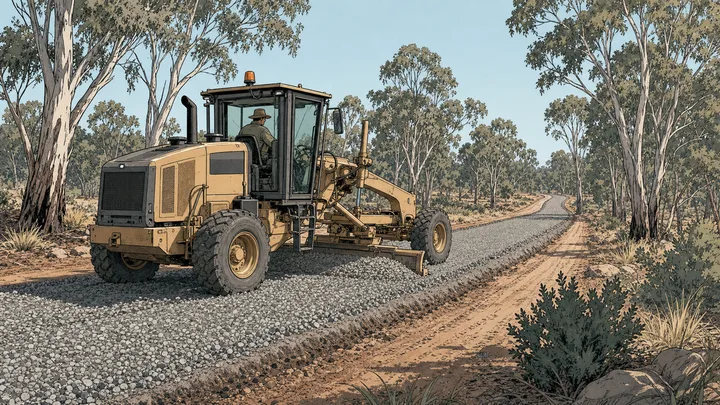
Australian roadbase
Switch to metric units and tonnes while retaining editable product density.

Base repair section
Enter the known repaired area, finished depth, and supplier minimum order.
Method
Build a road-base delivery from the finished course
The road base calculator measures the compacted footprint, estimates loose supply, identifies the number of planned lifts, and then rounds weight to a deliverable quantity.
Measure the finished base course
Enter the prepared footprint and compacted thickness assigned to road base rather than the whole road build-up.
Set product and lift assumptions
Choose the regional material context, loose density, supply factor, and maximum compacted lift depth.
Plan delivered weight and loads
Add explicit extra material and round the result to the supplier increment or practical truck capacity.
Live worked example — waiting on your inputs
Once the section is entered, the road base calculator will show finished volume, loose volume, lift count, exact weight, extra material, and supplier rounding.
FAQ
Road base calculator questions for US and Australian projects
The road base calculator FAQ addresses compacted depth, loose factors, lift limits, regional naming, tonnes, supplier density, and design boundaries.
How much road base do I need?
Enter the finished length, width, and compacted depth. The road base calculator applies the loose-volume factor and bulk density, adds extra material, reports lift count, and rounds the tonnage or volume for ordering.
How do I calculate compacted road base?
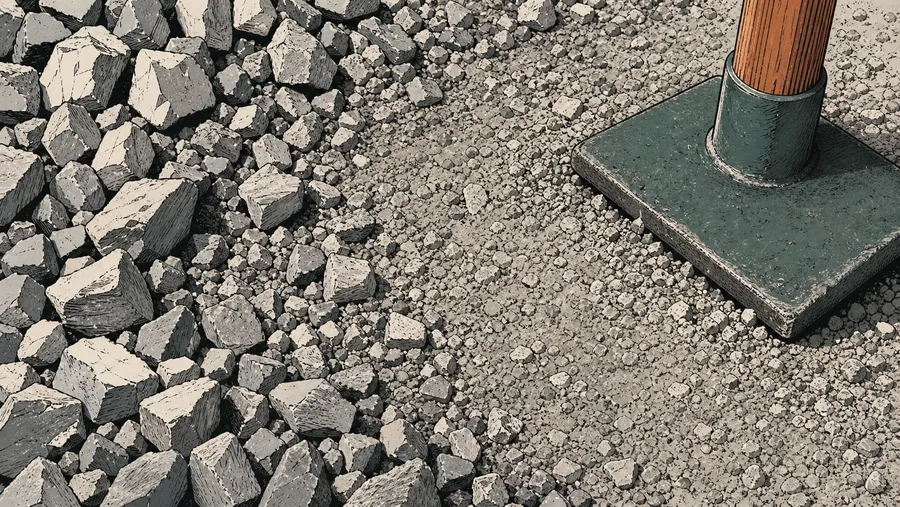
Use the specified finished compacted thickness as the depth. The editable compaction factor increases that installed volume to a loose purchase estimate; it should be replaced with reliable supplier or project information.
Is Australian roadbase the same as US Class 2 base?
No universal equivalence is assumed. The presets provide familiar naming and units, but local specifications, gradation, source, and moisture can differ. Confirm the actual product before ordering.
Does the road base calculator design the lift depth?
No. Lift depth is an editable planning input used to report a count. Equipment, moisture, layer design, compaction effort, testing, and acceptance remain project decisions.
Can it return Australian tonnes and metric dimensions?
Yes. Select the Australian region to use metres, millimetres, cubic metres, tonnes, kilograms, and Australian currency while retaining editable material and merchant values.
Calculation references and review
The road base calculator uses standard layer geometry, editable bulk density, and explicit NIST unit factors. FHWA gravel-road material is cited for road context only; it does not turn this quantity tool into pavement design guidance.
- FHWA — Gravel Roads Construction & Maintenance Guide
- ASTM C29/C29M-23 — bulk density and voids in aggregate
- NIST SP 811 Appendix B.9 — conversion factors by quantity
Reviewed by the gravelcalculator.app editorial team on . Review scope: unique project logic, geometry, unit factors, bulk-density language, purchasing assumptions, interface labels, and calculation boundaries.