Features
Everything you need to place one confident order
Unlike a basic gravel calculator, this one carries volume through density, extra material, packaging, cost, and supplier rounding.
Five area shapes, stacked
Combine five shape types; every project section is totalled automatically.
Editable bulk density
Start with a material preset, then replace it with the loose bulk density on your supplier’s quote.
Cost before you call
Add a local unit price, delivery charge, and minimum order to see the likely purchase total.
Bags and bulk bags
Translate the required weight into practical package counts using the bag sizes available near you.
Imperial and metric
Switch regional presets for feet, metres, short tons, tonnes, currencies, and familiar order units.
An estimate you can hand over
Copy, print, or share the result with assumptions and rounding visible.
What it is
A gravel calculator that speaks your supplier’s language
A gravel calculator turns area and depth into stone to buy. Converting cubic yards to tons, tonnes, or bags still depends on the loose material’s weight.
The gravel calculator keeps the chain together: geometry, editable density, compaction, extra material, pricing, and the supplier’s sales increment.
Why volume alone is not enough
A cubic yard is space; a ton is weight. Conversion requires bulk density, which changes with grading, moisture, and packing. This gravel calculator lets a supplier value replace its planning preset.
What the three modes are for
Amount needed turns dimensions into an order. Coverage shows how far a known quantity goes. Convert moves one quantity among volume and weight units at the density you select.
Reference data
Density and coverage, at a glance
Start with these rounded values, then enter product data in the gravel calculator before ordering.
Typical loose bulk density
short tons per cubic yard
Dry, loose planning figures only. Moisture and compaction can materially change weight per volume.
How far one cubic yard goes
square feet covered, by depth
| Depth | 1 yd³ | 1 ton | Typical use |
|---|---|---|---|
| 1 in | 324 ft² | 231 ft² | Top-up |
| 2 in | 162 ft² | 116 ft² | Decorative bed |
| 3 in | 108 ft² | 77 ft² | Path, walkway |
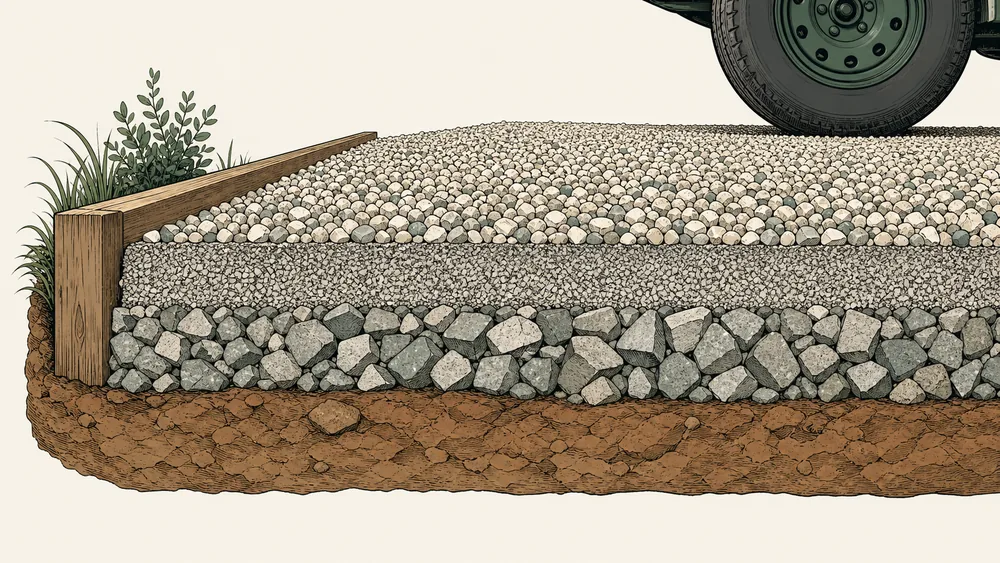
| 4 in | 81 ft² | 58 ft² | Driveway course |
| 6 in | 54 ft² | 39 ft² | Base, parking pad |
Ton coverage assumes 1.40 short tons/yd³ and does not include extra material.
Why it matters
Ordering gravel is a rounding problem, not a geometry problem
Density spread
Similar products can have different loose bulk densities.
Jobsite allowance
Edges, spillage, uneven excavation, and settling consume material.
Sales increment
Suppliers round to loadable delivery increments, not raw geometry.
The gravel calculator exposes all three steps, so you can adjust one assumption without losing the rest of the estimate.
Who it’s for
Built for anyone who has to name a number
The gravel calculator supports home projects, priced jobs, compacted bases, and yard orders.
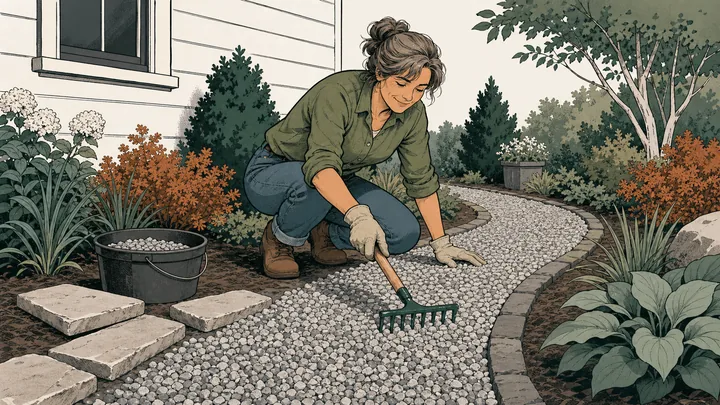
Homeowners & DIY
Plan a bed, path, or shed pad in familiar units, then compare bags with a small bulk order.
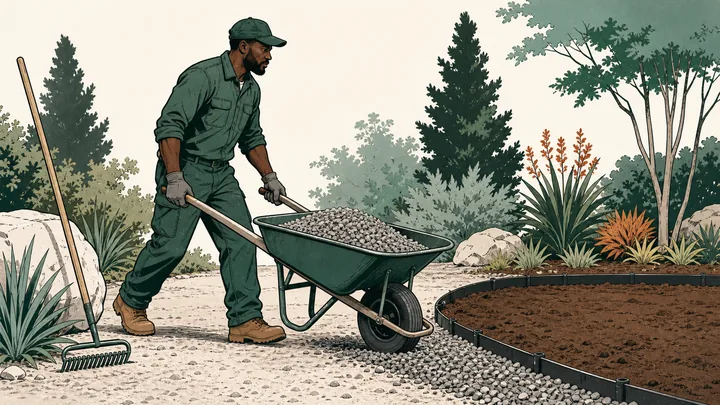
Landscapers
Stack multiple beds, use your own price and density, and keep the client estimate easy to explain.
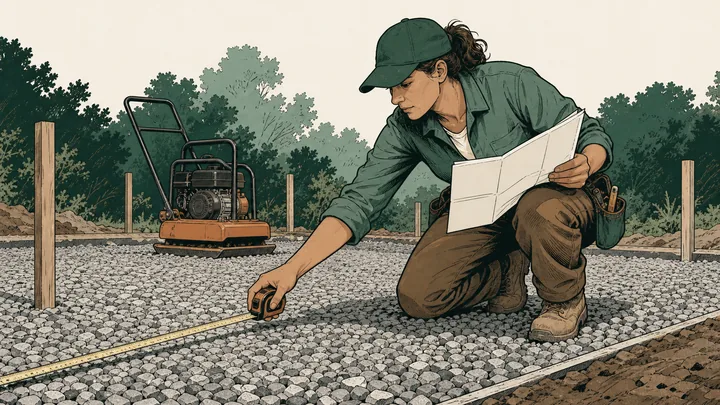
Contractors & builders
Account for compacted bases, supplier minimums, and the increments used for real site deliveries.
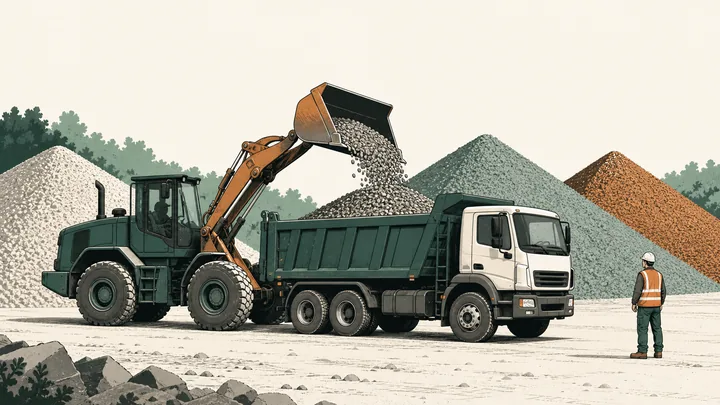
Suppliers & yards
Check a customer’s quantity using the density and sales increment for the material you stock.
Method
How the estimate is calculated
The gravel calculator follows a visible three-step path from measurements to the rounded supplier order.
Measure the area
Add one or more rectangles, circles, triangles, trapezoids, or enter a known area.
Set depth and material
Choose the finished depth and an editable loose bulk density to convert volume into weight.
Order with a buffer
Add extra material and round up to the unit and increment your supplier actually sells.
Worked example — waiting on your inputs
The calculation chain updates when your measurements are valid.
Explore
Popular calculators
Pea Gravel Calculator
Yards, tons, and bags for pea gravel at common landscape depths.
Gravel Driveway Calculator
Separate base and top-course quantities for a driveway run.
Landscape Rock Calculator
Decorative rock coverage by area, depth, and stone size.
River Rock Calculator
Volume and weight for rounded river rock in beds and drains.
Aggregate Calculator
Construction aggregate in metric or imperial supplier units.
Stone Calculator
Crushed stone volume, weight, bags, coverage, and cost.
French Drain Gravel Calculator
Trench volume and drainage-rock quantity around a pipe.
Paver Base Calculator
Base aggregate and bedding quantities for paving projects.
FAQ
Gravel questions, answered
Practical answers about quantities, weight, depth, density, and ordering.
How much gravel do I need?
The gravel calculator multiplies the combined area by the finished depth, applies the editable compaction factor and bulk density, adds your extra allowance, then rounds up to the supplier increment. Measure each section separately and confirm the final product density before ordering.
How do I convert cubic yards to tons?
Multiply cubic yards by loose bulk density in short tons per cubic yard. For example, 2 yd³ at 1.4 tons/yd³ is 2.8 short tons before extra material. The gravel calculator performs this in either direction in Convert mode.
How deep should gravel be?
Planning starts include 2 inches for decorative cover, 3 inches for a path, and 4 inches for a driveway top course. Structural bases may be deeper; follow the project design.
How much extra gravel should I order?
Five percent is a practical starting allowance for a measured rectangular area. Irregular edges, uneven excavation, spillage, and compaction may justify more. The gravel calculator shows the exact amount and buffered amount separately so the choice stays visible.
What gravel density should I use?
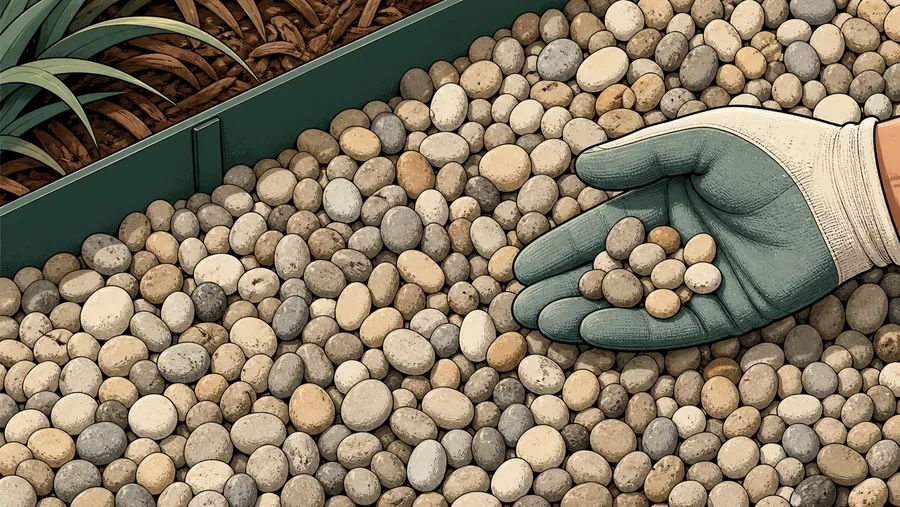
Use the supplier’s loose bulk density for the product. Rounded washed stone can be lighter than finely graded material. This gravel calculator keeps density editable because grading, voids, and moisture change weight.
How many bags are in a cubic yard?
At 1.40 short tons per cubic yard, one yard weighs 2,800 lb, or 56 50-lb bags. Enter the label weight; the gravel calculator rounds up.
Can I calculate an irregular or curved area?
Yes. Divide the footprint into simple shapes, add their areas, then apply a measured depth and a cautious edge allowance.
Calculation references and review
The engine uses standard geometry, explicit unit factors, and aggregate bulk density rather than particle relative density. ASTM C29/C29M covers aggregate bulk density and voids; NIST SP 811 provides the customary and SI conversion factors used for cross-checking.
- ASTM C29/C29M-23 — bulk density and voids in aggregate
- ASTM C127 — relative density and absorption of coarse aggregate
- NIST SP 811 Appendix B.9 — conversion factors by quantity
Reviewed by the gravelcalculator.app editorial team on . Review scope: calculation flow, unit factors, density terminology, interface labels, and supplier-order disclosures.