Plan the material
Measure the layer that remains after compaction
A finished base, a loose load and a compacted lift describe different stages of the same work.
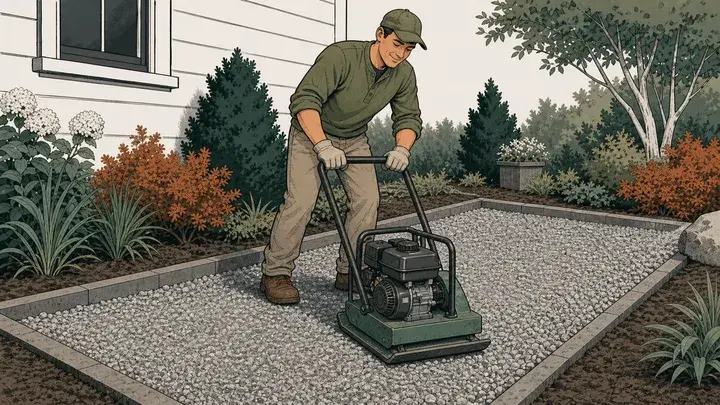
Finished base geometry
Use the compacted depth specified for the project, not the depth of a freshly tipped pile. Multiply the finished footprint by that thickness. Measure separate layers independently when materials or specified depths change.
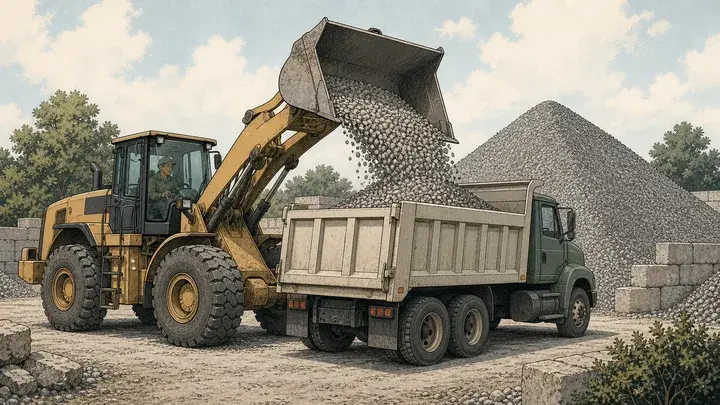
Loose purchase volume
Apply a factor appropriate to the material and its loose state. The truck ticket describes the purchase; the finished layer describes the result after placement. These volumes cannot be equated without a stated assumption.
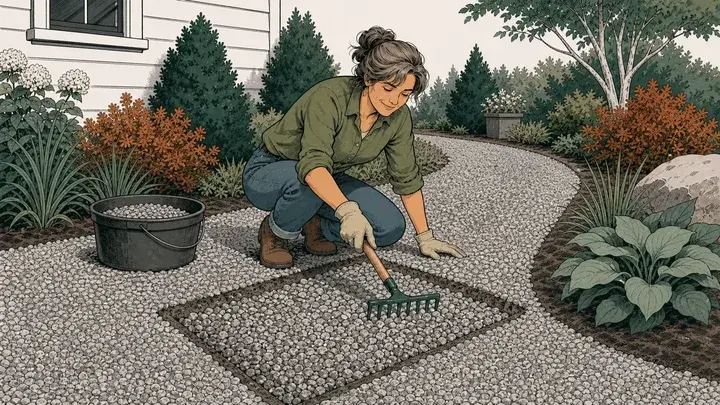
Work in specified lifts
Divide the total compacted thickness into layers no thicker than the chosen finished lift limit. The displayed equal-lift depth is a quantity-planning aid; actual pass counts and equipment settings come from the work specification.
Know the assumptions
A multiplier is not the same as percent shrinkage
The gravel compaction calculator accepts either loose volume divided by compacted volume, or shrinkage expressed as a share of the original loose volume. A 1.25 multiplier means one finished cubic metre needs 1.25 loose cubic metres.
A 20% reduction from the loose state also gives a 1.25 multiplier: divide by 0.80. Adding 20% would give only 1.20, which is a different assumption. Extra material for handling is applied after this conversion and is shown separately from the finished geometry.
Does 95% compaction mean a 1.05 factor?
No. A field density target relative to a laboratory reference is not the percentage of volume lost. Do not enter a specified percent compaction as shrinkage. Obtain the loose-to-compacted relationship separately.
Which density should I use for weight?
The purchase weight uses the loose volume multiplied by loose bulk density. Using a compacted density with that volume would mix two states and overstate the order mass.
The calculation, in three steps
From your inputs to the estimate
- 01Measure the finished volume
Compacted volume = area × finished layer depth.
- 02Recover loose volume
Loose volume = compacted volume × multiplier; multiplier = 1 ÷ (1 − shrinkage).
- 03Plan extra material and lifts
Order = loose volume × (1 + extra %). Lift count rounds total depth ÷ maximum finished lift upward.
Worked example
A 20 m² base finished 150 mm deep
1.25 illustrative multiplier · zero extra material · 100 mm finished lift limit
Each equal lift is 75 mm after compaction, below the entered 100 mm limit. A 5% handling allowance would increase the loose order to 3.9375 m³. Neither the example factor nor the lift limit is a universal gravel specification.
Before you order
Keep the assumptions in the right place
Do not apply the factor twice
If the supplier or earlier takeoff already converted the volume to loose material, use that purchase quantity directly when ordering or pricing it.
Distinguish material types
An open-graded drainage stone and a fines-rich base may respond differently to placement. Use material-specific information rather than copying a factor between products.
Keep lift units explicit
The lift field always uses finished millimetres, even when project depth is entered in inches. Convert a loose-lift equipment recommendation before using that field.
Quick answers
Compaction and ordering questions
What is the correct gravel compaction factor?
There is no single factor for every grading, moisture condition and placement method. The default 1.25 is an example you can replace with a measured or supplier-supported loose-to-compacted volume ratio.
How do I calculate a factor from measured volumes?
Divide loose volume by finished compacted volume for the same material quantity. For example, 12 m³ loose divided by 10 m³ compacted gives 1.20. Keep the measurement method and material condition consistent.
Does the calculator tell me whether compaction passed?
No. It estimates purchase quantities and layer counts. Acceptance of the placed material requires the project’s specified testing and inspection; a volume estimate cannot replace a field measurement.
Can I enter a shrinkage value of 100%?
No. A 100% reduction would leave no finished material and make the reverse calculation undefined. The input accepts up to 95% for arithmetic, but high values should be checked carefully against the source.
Sources and review
The loose-to-finished equations are volume identities, not prescribed material factors. NIST is the source for unit conversions. The multiplier, density and lift limit remain explicit project inputs; illustrative values do not establish compaction performance.
Reviewed by the gravelcalculator.app editorial team on . Scope: calculation assumptions, unit conversions, rounding and material-estimate boundaries.