Tool features
Why this crusher run calculator starts with finished depth
The crusher run calculator treats the rolled layer and the loose stockpile as two different quantities, then shows how density, lifts, and delivery rounding affect the order.
Compacted-base workflow
Start with finished thickness and expose the loose-volume multiplier used before rolling or tamping.
Base-shaped measurement
Build a driveway or pad from several measured sections while keeping the crusher-run course independent.
Fines-rich density control
Use the quarry value for the actual blend instead of borrowing a clean-stone conversion.
Deep-course lift check
Compare finished base thickness with an editable maximum lift depth before planning placement.
Delivery or bag route
See rounded bulk tonnage alongside whole packages for repairs that are too small for a full load.
Base cost stays isolated
Price crusher run without mixing in a different driveway surface material or an assumed installation charge.
What changes the result
Crusher run must be estimated as a compacted blend
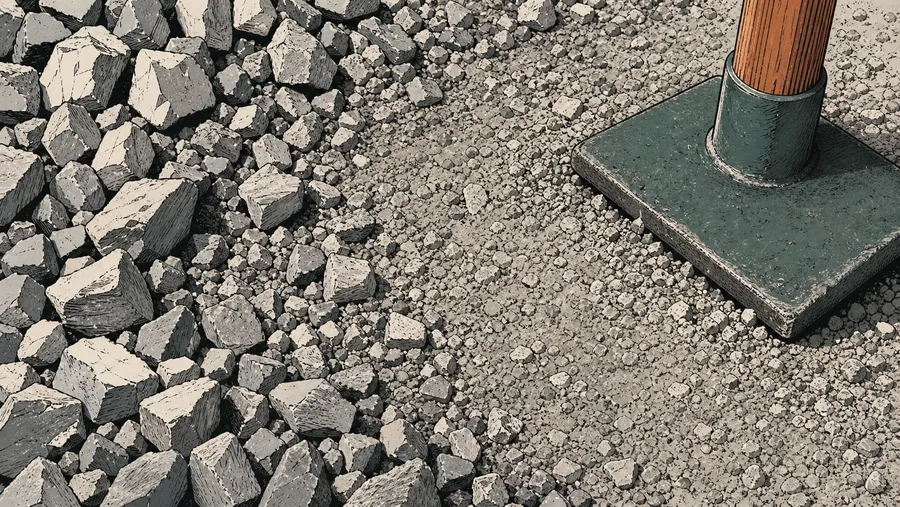
Crusher run, crush and run, and many aggregate-base products combine larger stone with fines. The fines help the layer knit together, but they also make loose stockpile volume and finished compacted volume different quantities.
The crusher run calculator starts from the finished footprint and depth. It applies a visible loose-volume factor before density, extra material, bags, cost, and supplier rounding are calculated.
A crusher run calculator is most useful when the compacted target, loose-volume factor, and quarry blend travel together; changing any one of them should visibly change the purchase quantity.
Measure finished depth, not the fluffy pile
Enter the target compacted thickness on the ground. The compaction factor then estimates how much loose material may be needed to achieve it.
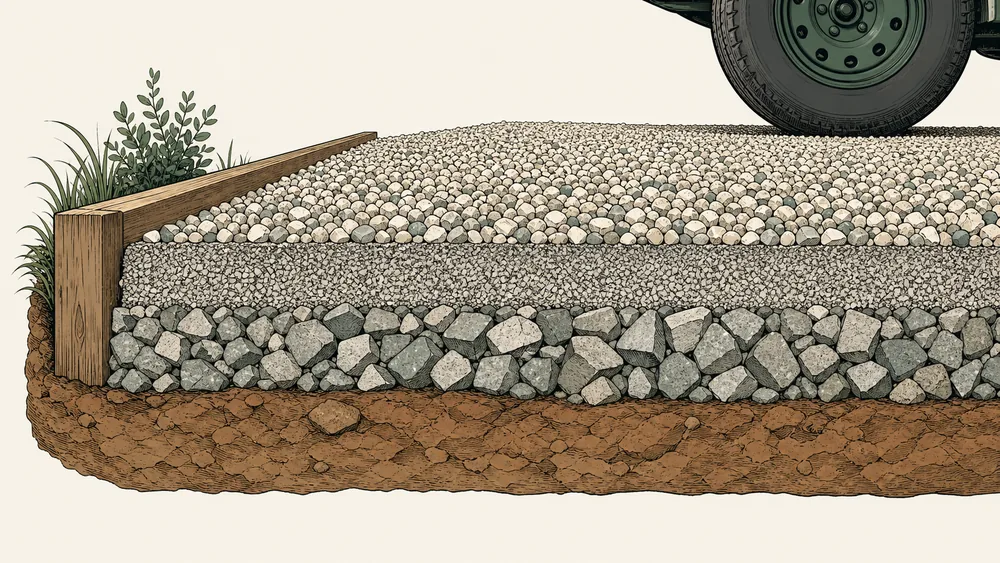
Plan thick bases in lifts
Deep fills are commonly placed in more than one lift. The result reports a planning lift count when a maximum compacted lift depth is supplied.

Reference data
Crusher run density, depth, and lift reference
Use the calculator presets as transparent starting points and replace them with project or supplier values.
Planning values
editable in the calculator
A quantity calculator cannot determine structural thickness, drainage, subgrade preparation, or compaction equipment.
Crusher run calculation chain
visible from input to purchase
The finished layer, loose factor, lift limit, and quarry density should be checked independently before the rounded tonnage is accepted.
Why it matters
Do not hide compaction inside the tonnage
Finished depth
Enter the compacted target rather than an unrolled loose depth.
Loose factor
Adjust the planning multiplier to match supplier and field experience.
Placement check
A deep base may need more than one compacted layer.
The result keeps installed volume, loose volume, exact weight, buffered weight, and rounded order as separate numbers.
Where it fits
Crusher run projects the tool is built around
The interface is tuned for fines-rich compacted base material rather than decorative loose gravel.

Driveway base
Estimate a dense base under a separate surface course without mixing the layers.
Shed or equipment pad
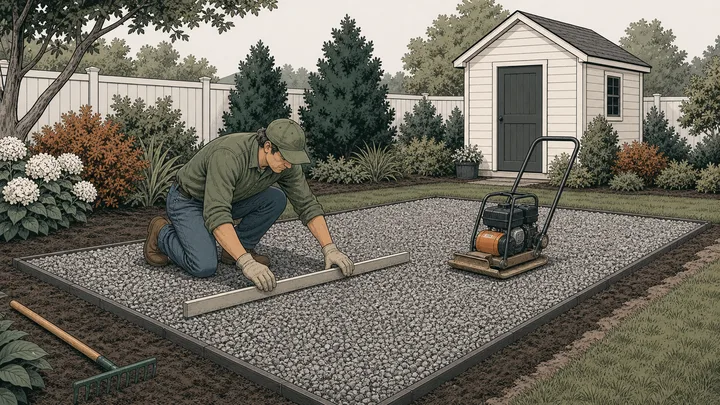
Calculate a rectangular or known-area pad and expose the compaction allowance.

Firm walkway base
Use a shallower preset and compare bulk delivery with bagged material.

Base-course repair
Enter a small known area, local bag size, and the minimum order quoted nearby.
Method
Build the crusher-run order from the compacted layer
The crusher run calculator measures the finished course first, expands it to a loose purchase volume, and only then applies weight, waste, bags, price, and load increments.
Measure the compacted footprint
Enter only the area and finished thickness assigned to the crusher-run base course.
Expand finished volume to loose supply
Use the editable factor to represent the difference between the rolled layer and delivered material.
Round the quarry order
Convert loose volume with the quoted blend density, add site allowance, and round to the yard’s invoice increment.
Live worked example — waiting on your inputs
Run the example and the crusher run calculator will separate finished volume, loose volume, exact tonnage, buffered tonnage, lift count, and the final supplier round-up.
FAQ
Crusher run calculator questions for compacted bases
The crusher run calculator FAQ covers local product names, loose versus compacted volume, driveway use, quarry density, and what the tool cannot design.
How much crusher run do I need?
Enter the footprint and finished compacted depth. The crusher run calculator increases that installed volume by the compaction factor, converts it with the selected loose bulk density, adds extra material, and rounds the purchase upward.
Is crush and run the same as crusher run?
The names often describe a similar blend of coarse crushed aggregate and fines, but local gradations are not guaranteed to match. Select the closest preset and confirm the quarry product and density.
Can I use the crusher run calculator for a driveway?
Yes for the crusher-run base quantity. If the driveway has a different top course, calculate that layer separately or use the dedicated gravel driveway calculator, which keeps both materials and costs apart.
Does the crusher run result show loose or compacted volume?
It shows both. Finished compacted volume comes directly from area and depth; loose purchase volume is the finished amount multiplied by the editable loose-volume factor.
Where should I get crusher run density?
Use a loose bulk-density value from the supplying quarry, ticket, or reliable product data. Do not substitute particle specific gravity or a compacted field density.
Calculation references and review
The crusher run calculator applies standard geometry and editable bulk-density inputs; ASTM C29/C29M provides the bulk-density context, while the FHWA gravel-road guide is used only to explain why material and placed-layer assumptions matter.
- ASTM C29/C29M-23 — bulk density and voids in aggregate
- ASTM C127 — relative density and absorption of coarse aggregate
- FHWA — Gravel Roads Construction & Maintenance Guide
Reviewed by the gravelcalculator.app editorial team on . Review scope: unique project logic, geometry, unit factors, bulk-density language, purchasing assumptions, interface labels, and calculation boundaries.