Tool features
What the pea gravel calculator measures beyond a rectangle
The pea gravel calculator handles paths, play areas, circular beds, rings, and small bagged jobs while keeping finished depth and loose bulk density open to correction.
Rounded-stone presets
Use pea gravel or pea shingle planning density and avoid a hidden compaction multiplier intended for dense base.
Play areas and curved beds
Combine rectangular runs, circular zones, rings, and known areas without treating every project as a box.
Washed-stone density field
Use the supplied loose weight for the selected pea gravel instead of a dense-base conversion.
Finished surface depth
Keep the visible pea-gravel layer separate from any structural aggregate or drainage work below it.
Package-count planning
Round the required weight to the exact bag label available for small paths, beds, or repairs.
Bulk-versus-bag cost
Compare local package and bulk pricing with delivery and minimum-order terms supplied by the seller.
What changes the result
Pea gravel quantity depends on containment and depth
Rounded pea gravel shifts under foot and can migrate beyond an uncontained edge. The quantity tool cannot choose edging or a base, but it can keep the measured bed, finished depth, and extra allowance explicit.
Pea gravel and pea shingle names cover products from different rock sources. Start with the planning density, then use the bag label or supplier bulk density for the exact material and market.
Use the pea gravel calculator only for the pea-gravel layer itself; edging, geotextile, structural base, drainage design, and any excluded objects need separate decisions.
Bulk delivery versus small bags
A bag count is based on weight printed on the package, while a yard or tonne order uses bulk density. Compare both outputs before choosing how the site can receive material.
Why the default compaction factor is 1.00
Rounded washed gravel does not behave like fines-rich crusher run. The field stays editable, but the calculator does not silently add a base-material compaction factor.
Reference data
Pea gravel depth, coverage, and package reference
Set the finished depth for the actual use, then let the calculator convert that volume into bulk or bagged material.
Planning starting points
finished loose layer
Play surfaces, accessibility routes, drainage systems, and load-bearing applications require requirements beyond a quantity estimate.
Pea gravel takeoff
visible from input to purchase
Retain the measured surface, finished cover depth, washed-stone density, package label, and extra allowance with the result.
Why it matters
A pea gravel order is volume first, packaging second
No hidden compaction
The default keeps rounded loose gravel distinct from compacted base.
Migration allowance
Edges, curves, spillage, and hand placement can increase the useful order.
Editable bag size
Use the local label; UK and metric presets use kilograms.
If a supplier sells by scoop or bulk bag, translate that package to a known weight or volume before changing the rounding control.
Where it fits
Pea gravel projects with different quantity assumptions
The same rounded stone can be sold for several uses, but each use still needs its own measured depth and containment plan.
Contained path
Measure the walking surface and keep edging and structural base outside this material total.
Landscape bed
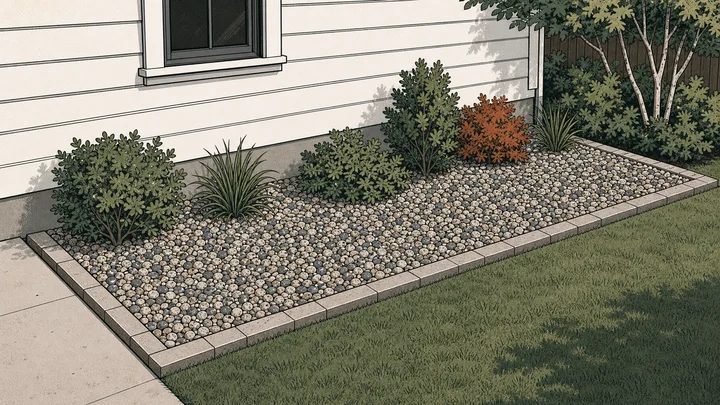
Use rectangles, circles, or rings around planted areas and fixed features.
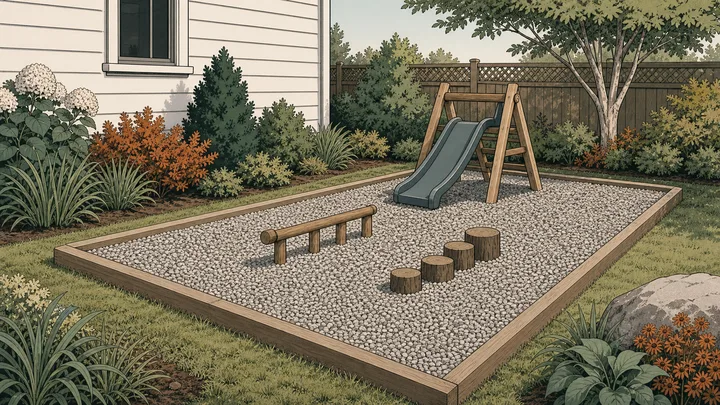
Play-area quantity
Estimate material only; confirm fall-height and safety requirements independently.
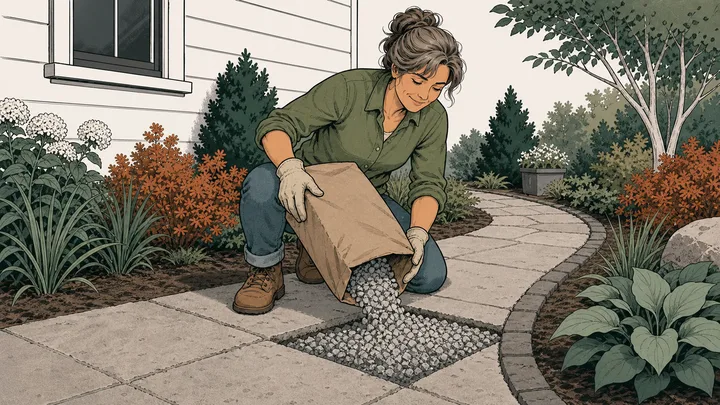
Bagged project
Round to whole bags and compare that result with the supplier’s minimum bulk order.
Method
Move from a smooth gravel surface to whole bags or bulk weight
The pea gravel calculator totals the selected shapes, applies the finished cover depth, and converts the result with a pea-gravel density rather than a dense-base assumption.
Measure the pea-gravel surface
Total each path, bed, ring, or play-area section and omit edging or objects that remain uncovered.
Set cover and supplied weight
Enter the finished depth and use a loose bulk density for the actual washed product when available.
Compare bags with bulk supply
Apply the chosen allowance, calculate whole packages, and round any bulk result to the seller’s increment.
Live worked example — waiting on your inputs
After calculation, the pea gravel calculator will show covered area, cubic volume, tons or tonnes, bag count, extra material, and the final rounded purchase.
FAQ
Pea gravel calculator questions for paths, beds, and bags
These pea gravel calculator answers cover depth, circular areas, settling, bag labels, bulk density, and the limits of decorative-surface estimates.
How much pea gravel do I need?
Measure the contained footprint and enter the finished pea-gravel depth. The pea gravel calculator converts area to volume, applies your extra allowance, and reports cubic yards, tons, tonnes, and whole bags.
How many 50 lb bags are in a cubic yard of pea gravel?
At a planning density of 1.35 short tons per cubic yard, one cubic yard weighs about 2,700 lb, or about 54 bags at 50 lb each. Actual product density and bag fill vary, so use the editable values.
Can I calculate pea gravel for a circular area?
Yes. Choose Circle and enter the diameter, or choose Ring to subtract a planted center. Multiple shapes can be combined when the project has separate beds or path sections.
Can I calculate a circular pea-gravel play area?
Yes. Select Circle and enter its finished diameter, or add several shapes for a more complex boundary. The pea gravel calculator totals those sections before depth is applied.
Does the estimate account for settling?
The editable loose or compaction factor can represent a planning difference between installed and purchased volume. Use a value supported by the product or installation plan rather than assuming every pea-gravel job compacts alike.
Calculation references and review
The pea gravel calculator applies standard area and depth geometry with NIST conversions. Its default weight is a transparent planning bulk density, not particle specific gravity or a guaranteed value for every washed pea-gravel product.
- ASTM C29/C29M-23 — bulk density and voids in aggregate
- ASTM C127 — relative density and absorption of coarse aggregate
- NIST SP 811 Appendix B.9 — conversion factors by quantity
Reviewed by the gravelcalculator.app editorial team on . Review scope: unique project logic, geometry, unit factors, bulk-density language, purchasing assumptions, interface labels, and calculation boundaries.